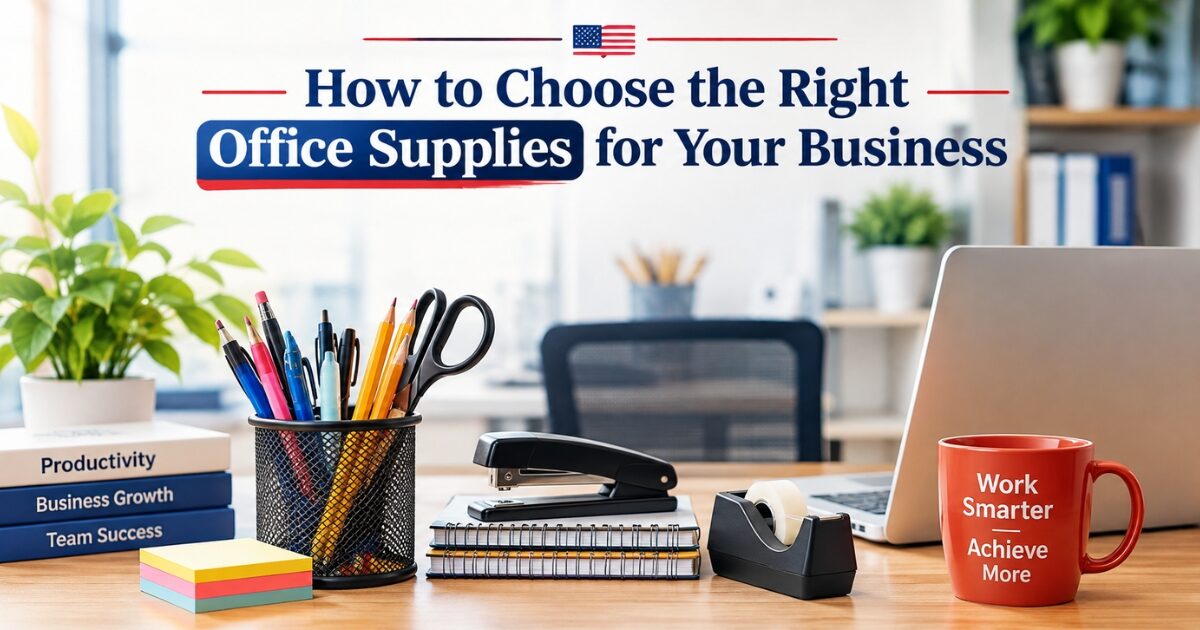
Choosing the right office supplies is one of the most important decisions any business can make. Whether you operate a small startup, a growing company, a healthcare facility, or a large corporate office, the products you use every day directly influence employee productivity, workplace organization, and operating costs. While office supplies may seem like a small part of a company’s budget, selecting the right products can significantly improve efficiency and create a more professional working environment.
Many organizations make purchasing decisions based solely on price. However, the lowest-priced product is not always the most cost-effective option in the long run. High-quality supplies typically last longer, reduce replacement frequency, and help employees perform their daily tasks more efficiently. Understanding your organization’s needs before placing an order is the first step toward building a smarter procurement strategy.
Understand Your Business Requirements Before Purchasing
Every business has unique operational needs, making it essential to evaluate your daily workflow before purchasing office supplies. A marketing agency may require presentation materials, premium paper, and creative accessories, while an accounting firm might prioritize filing systems, calculators, and document storage solutions. Healthcare organizations, educational institutions, and government agencies each have their own specialized requirements.
Instead of buying supplies based on habit or previous orders, businesses should regularly review how products are being used. Some items may be ordered too frequently, while others remain unused in storage for months. Conducting a simple inventory review can reveal purchasing patterns and highlight opportunities to optimize spending.
Planning ahead also helps prevent emergency purchases. When employees constantly run out of basic supplies such as printer paper, pens, toner cartridges, or folders, productivity suffers as staff spend valuable time searching for replacements. Establishing minimum inventory levels ensures essential products are always available without overstocking.
Identify Frequently Used Products
Most offices rely on a core group of products every day. Items such as copy paper, notebooks, writing instruments, sticky notes, binders, envelopes, labels, filing folders, and printer consumables should receive the highest priority during procurement planning. These products experience the highest usage rates and should always be available.
Tracking purchasing history over several months allows businesses to estimate future demand more accurately. Seasonal changes, company growth, and new hiring plans should also be considered when forecasting inventory requirements.
Focus on Quality Rather Than Price Alone
One of the biggest mistakes organizations make when purchasing office supplies is selecting products based entirely on the lowest available price. Although inexpensive products may appear attractive initially, they often result in higher replacement costs, reduced durability, and unnecessary employee frustration.
For example, low-quality printer paper may increase paper jams and maintenance costs. Cheap writing pens can stop working unexpectedly during meetings. Inferior folders or storage boxes may deteriorate quickly, requiring repeated replacements throughout the year.
Investing in reliable products from reputable manufacturers often reduces the overall cost of ownership. Better-performing products minimize downtime, improve workflow, and support a more professional image for both employees and customers.
Balance Performance and Budget
Choosing premium products for every category is not always necessary. Instead, organizations should classify products according to their importance. Everyday consumables can be selected from trusted mid-range brands, while mission-critical products such as printers, toner cartridges, ergonomic office equipment, or document storage systems may justify a larger investment due to their long-term impact on operations.
This balanced approach allows businesses to control expenses while maintaining consistent quality across the workplace.
Create an Efficient Procurement Strategy
An organized purchasing process helps companies avoid unnecessary spending and reduces administrative workload. Rather than allowing each department to order supplies independently, many organizations centralize procurement through a designated purchasing team or approved supplier.
Centralized purchasing offers greater visibility into spending, simplifies inventory management, and often enables volume discounts. Businesses also gain better control over product standardization, ensuring employees use compatible supplies across departments.
Working with a dependable supplier also improves consistency. Reliable vendors maintain stable inventory, provide professional customer support, and offer a broad selection of products that meet changing business requirements.
Establish Regular Ordering Cycles
Instead of placing small orders every few days, organizations should establish regular purchasing schedules. Weekly or monthly ordering cycles reduce shipping costs, simplify budgeting, and improve inventory planning.
Businesses should periodically review purchasing reports to identify products with unusually high consumption. This analysis may reveal opportunities to reduce waste, improve employee awareness, or replace inefficient products with better alternatives.
Choose Sustainable Office Supplies Whenever Possible
Environmental responsibility has become an important consideration for modern organizations. Many businesses now prefer sustainable office supplies that reduce waste while supporting corporate sustainability initiatives.
Products made from recycled materials, refillable writing instruments, reusable storage solutions, and energy-efficient office equipment contribute to a greener workplace without sacrificing performance. Digital document management systems can further reduce paper consumption while improving accessibility and collaboration.
Although environmentally friendly products sometimes carry slightly higher purchase prices, they often generate long-term value by supporting corporate social responsibility goals and strengthening brand reputation.
Reduce Waste Through Better Inventory Management
Waste is not always caused by excessive product usage. In many cases, organizations simply purchase more than they need. Overstocked supplies may become obsolete, damaged, or forgotten before they are ever used.
Maintaining accurate inventory records and monitoring product turnover helps businesses purchase only what they actually require. This approach reduces storage costs while minimizing unnecessary waste.
Support Employee Productivity with the Right Equipment
Office supplies extend beyond paper and pens. Modern workplaces depend on a combination of traditional supplies and technology products that help employees work more effectively.
Comfortable office chairs, ergonomic keyboards, adjustable monitor stands, high-quality headsets, reliable printers, and efficient storage systems all contribute to employee satisfaction and improved productivity. Small improvements in workplace comfort often lead to measurable gains in efficiency over time.
Organizations should regularly gather employee feedback regarding frequently used products. Staff members who use office equipment every day can provide valuable insights into product quality, durability, and usability that may not be apparent during the purchasing process.
Standardize Products Across Departments
Using standardized office supplies simplifies inventory management and employee training. Standardization also improves purchasing efficiency by reducing the number of product variations that need to be stocked.
When every department uses compatible supplies, replacement becomes easier, procurement becomes more predictable, and employees can quickly locate the materials they need.
Partner with a Trusted Office Supply Provider
Selecting the right supplier is just as important as selecting the right products. A dependable supplier should offer an extensive product catalog, competitive pricing, consistent inventory availability, and responsive customer support.
Businesses benefit from working with suppliers that understand procurement challenges and can recommend products based on operational needs rather than simply promoting the most expensive options. Reliable suppliers also help organizations adapt to changing requirements by introducing new products, managing special orders, and providing flexible purchasing solutions.
Companies that establish long-term supplier relationships often experience smoother procurement processes, better pricing opportunities, and more consistent product quality over time.
Conclusion
Selecting the right office supplies involves much more than filling shopping carts with everyday products. It requires understanding business requirements, prioritizing quality, improving procurement strategies, supporting employee productivity, and partnering with dependable suppliers.
Organizations that approach purchasing strategically can reduce operating costs while creating a workplace that is organized, efficient, and prepared for future growth. By evaluating inventory regularly, investing in reliable products, and developing strong supplier relationships, businesses can ensure they always have the right tools available to support daily operations.
At JC Global Supply, we understand that every organization has unique procurement needs. Our extensive selection of office products, workplace essentials, technology solutions, furniture, and business supplies helps companies simplify purchasing while maintaining the quality and reliability they expect. Whether your business is expanding, upgrading existing workspaces, or optimizing procurement processes, choosing the right office supplies today will contribute to greater productivity and long-term success tomorrow.