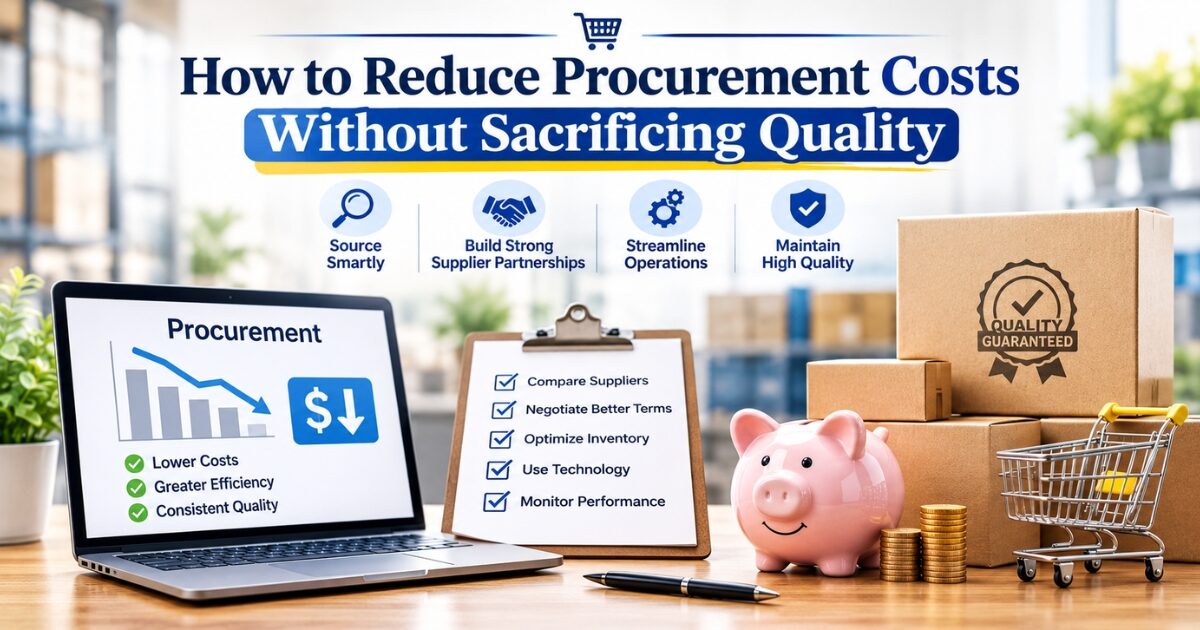
For organizations of every size, procurement is more than purchasing products at the lowest possible price. It is a strategic process that directly influences operational efficiency, customer satisfaction, and long-term profitability. Many businesses assume that reducing procurement expenses requires sacrificing product quality, but experienced procurement professionals understand that the opposite is often true. A well-planned sourcing strategy allows companies to lower costs while maintaining the standards that support business growth.
Whether your organization purchases office supplies, technology products, furniture, medical equipment, or industrial materials, making smarter purchasing decisions can significantly improve your bottom line. Instead of focusing only on unit price, successful procurement teams evaluate suppliers, product performance, inventory management, and long-term partnerships to achieve sustainable savings.
Build a Strategic Procurement Process Instead of Chasing the Lowest Price
One of the biggest mistakes businesses make is choosing suppliers solely based on the lowest quotation. While a cheaper product may reduce initial spending, hidden costs often appear later through shorter product life, delayed deliveries, inconsistent quality, or increased maintenance requirements. A strategic procurement process evaluates the complete cost of ownership rather than only the purchase price.
Businesses should establish purchasing policies that prioritize reliability, supplier performance, warranty coverage, and product consistency. These factors contribute to lower operational costs over time because employees spend less time dealing with defective products, emergency replacements, or unexpected supply shortages.
Professional procurement teams also analyze purchasing patterns throughout the year. By understanding seasonal demand and recurring purchasing needs, organizations can negotiate better pricing, schedule deliveries more efficiently, and avoid costly last-minute purchases.
Evaluate Total Cost of Ownership for Better Purchasing Decisions
The concept of Total Cost of Ownership (TCO) is essential for organizations seeking to reduce procurement expenses without compromising quality. TCO considers every cost associated with a product throughout its lifecycle rather than focusing exclusively on the purchase price.
For example, an office printer with a lower purchase price may consume more toner, require frequent maintenance, and experience more downtime than a premium model. Although the initial investment appears attractive, the long-term operating costs can be significantly higher. Similar situations occur with office furniture, computer hardware, medical equipment, and shipping supplies.
When procurement managers evaluate durability, warranty terms, maintenance requirements, replacement frequency, and operational efficiency, they often discover that investing in higher-quality products actually reduces total spending over several years.
Focus on Long-Term Value Rather Than Immediate Savings
Purchasing decisions should support the organization’s long-term objectives. Selecting dependable products reduces operational interruptions, improves employee productivity, and minimizes replacement costs. This balanced approach allows companies to maintain quality standards while achieving measurable financial savings.
Develop Strong Relationships with Reliable Suppliers
Successful procurement is built on trust and long-term collaboration. Companies that maintain stable relationships with experienced suppliers often receive better pricing, faster response times, priority inventory allocation, and improved customer service.
Reliable suppliers understand their customers’ purchasing history and business requirements. This knowledge enables them to recommend alternative products, identify cost-saving opportunities, and provide customized procurement solutions that fit operational needs.
Long-term supplier partnerships also reduce the administrative burden associated with sourcing new vendors, evaluating product quality, and managing multiple purchasing agreements. Instead of repeatedly negotiating with unfamiliar suppliers, procurement teams can focus on strategic planning and continuous improvement.
Communication Creates Better Procurement Results
Regular communication helps suppliers understand future purchasing plans and anticipated demand. Sharing forecasts enables suppliers to prepare inventory in advance, negotiate better manufacturer pricing, and reduce supply chain disruptions. In return, customers benefit from more competitive pricing and dependable product availability.
Standardize Products Across the Organization
Many businesses unknowingly increase procurement costs by purchasing multiple brands or product variations that perform similar functions. Standardization simplifies purchasing decisions, improves inventory management, and creates stronger negotiating power with suppliers.
For example, using standardized office supplies, printer cartridges, technology accessories, and furniture models reduces complexity while allowing procurement teams to purchase larger quantities at more competitive prices. Employees also become familiar with consistent products, reducing training needs and operational inefficiencies.
Standardization does not eliminate flexibility. Instead, it creates a controlled purchasing environment where approved products meet established quality standards while delivering better overall value.
Use Procurement Data to Identify Cost-Saving Opportunities
Modern procurement decisions should be supported by accurate purchasing data. Reviewing spending reports helps organizations identify unnecessary purchases, duplicate orders, supplier inconsistencies, and opportunities for volume discounts.
Data analysis allows procurement managers to answer important questions. Which products are purchased most frequently? Which suppliers consistently deliver on time? Which departments exceed purchasing budgets? Understanding these patterns enables better decision-making and more efficient budget allocation.
Organizations that regularly monitor procurement metrics often discover significant savings simply by improving purchasing visibility and eliminating waste.
Monitor Key Procurement Performance Indicators
Performance indicators such as supplier delivery accuracy, order fulfillment rates, purchase cycle times, inventory turnover, and contract compliance provide valuable insight into procurement efficiency. Measuring these metrics supports continuous improvement while maintaining consistent product quality.
Optimize Inventory Without Creating Shortages
Inventory management plays a major role in procurement cost control. Excess inventory ties up valuable capital, increases storage costs, and creates the risk of product obsolescence. On the other hand, insufficient inventory leads to emergency purchasing, expedited shipping expenses, and operational delays.
An effective inventory strategy balances product availability with efficient stock levels. Businesses should review historical purchasing data, forecast future demand, and coordinate replenishment schedules with trusted suppliers.
Technology solutions can automate inventory monitoring and notify purchasing teams before stock levels become critical. This proactive approach reduces unnecessary spending while ensuring business operations continue without interruption.
Balance Quality Standards with Budget Objectives
Maintaining quality does not require purchasing the most expensive products available. Instead, procurement professionals should establish clear quality standards that align with operational requirements. Products should meet performance expectations, comply with industry regulations where applicable, and provide dependable long-term value.
Regular supplier evaluations help ensure quality remains consistent over time. Businesses should review product performance, customer service responsiveness, warranty support, and delivery reliability as part of ongoing supplier management.
When procurement decisions are based on measurable performance rather than assumptions, organizations achieve both financial savings and operational excellence.
Partner with Experienced Procurement Specialists
Working with an experienced procurement partner can simplify purchasing while improving cost efficiency. Professional suppliers understand market trends, manufacturer pricing, product availability, and sourcing alternatives across multiple industries.
Instead of managing numerous vendors independently, businesses benefit from consolidated purchasing, simplified order management, and access to a broader selection of quality products. This approach reduces administrative costs while improving purchasing consistency.
At JC Global Supply, we help organizations streamline procurement through dependable sourcing solutions across office supplies, technology products, furniture, medical supplies, shipping products, and business essentials. Our goal is to provide competitive pricing without compromising the quality and reliability our customers expect.
Conclusion
Reducing procurement costs without sacrificing quality is not about finding the cheapest supplier. It is about making informed purchasing decisions based on long-term value, supplier reliability, inventory optimization, and strategic planning. Organizations that invest in structured procurement processes consistently reduce waste, improve operational efficiency, and strengthen financial performance.
By focusing on supplier partnerships, total cost of ownership, standardized purchasing, and data-driven decision-making, businesses can build a procurement strategy that supports sustainable growth. Quality and cost savings are not competing priorities—they work together when procurement is managed with expertise, transparency, and a commitment to continuous improvement.